
A driver in Doncaster East drops a car key down a stormwater drain on a Tuesday morning and starts ringing around for quotes. The numbers that come back can differ by several hundred dollars for what sounds like an identical job.
That spread is not padding, it comes down to real differences in the key itself, the vehicle it belongs to, and who does the work.
What actually sets the price
Three things drive the cost of a replacement key more than anything else: the type of key your vehicle uses, whether you still have a working key or have lost all of them, and who is doing the cutting and programming.
A basic mechanical key for an older Mazda 3 costs far less to replace than a smart proximity key for a late-model Volkswagen Golf, because the second one involves chip programming and often factory-level software.
Labour time matters too. Cutting a key to code from the vehicle identification number (VIN) takes longer than duplicating an existing key, and programming a transponder chip to talk to the immobiliser adds another step again.
Each extra step is billed time, not an arbitrary markup, and a locksmith who explains which steps your job needs is easier to trust than one who just quotes a flat number.
Basic keys, transponder keys, and smart keys compared
Basic cut keys, the kind with no electronics, are the cheapest to replace and mostly found on vehicles built before the early 2000s. There is nothing to program, so the job is metal cutting only, usually finished in a few minutes on site.
Transponder keys became standard through the 2000s and carry a small chip embedded in the plastic head that communicates with the car’s immobiliser system.
Losing one of these means the replacement has to be cut and then coded to the vehicle, which is why the price sits higher than a basic key, even though the physical cutting step is identical.
Smart keys and proximity fobs, common on newer Toyota, Hyundai, and Ford models, let the driver start the car with a push button as long as the key is nearby.
These involve the most complex programming and sometimes require dealer-level diagnostic tools connected through the OBD port, which puts them at the top end of the price range.
As a rough guide, car key replacement often runs from around $150 to $450 depending on the key type and vehicle, though transponder and smart keys sit at the higher end of that range.
Beyond the electronics, the physical shape of the key blade affects cost too.
Standard blade keys are cut on relatively simple machines, but laser-cut sidewinder keys, used on many Holden Commodore and Ford Falcon models from the mid-2000s onward, need a different cutting machine that reads a groove pattern down the centre of the blade rather than simple edge notches.
A locksmith who only carries basic cutting equipment cannot produce these blades at all, which is why some quotes for the same vehicle vary so much between operators.
When all the keys are gone, not just one
Losing your only key is a different job to losing a spare.
If all keys are lost, the locksmith has to cut a new key from scratch using the VIN and then program it into the immobiliser system with no reference key to read from, which takes longer and typically costs more than a straightforward duplication.
This scenario is common enough that it is worth understanding before it happens.
If you are trying to work out what your options actually are with no spare in hand, the article on lost car keys with no spare walks through the process in more detail, including how cutting to code differs from a standard replacement.
Why the vehicle make and model changes the number
Not all cars are equal when it comes to key replacement cost. Mainstream Asian brands such as Toyota, Mazda, and Hyundai generally use key systems that are well documented and widely supported, which keeps parts availability and programming costs down across most of their model range.
European vehicles, including BMW, Mercedes-Benz, Audi, and Volkswagen, often use more tightly locked-down security systems that need specific dealer-level equipment or manufacturer software subscriptions to program correctly, which pushes labour time up even when the key blank itself is not expensive.
Older Holden and Ford models sit somewhere in the middle, with plenty of parts available but occasional quirks depending on the exact model year and whether the vehicle was built before or after a particular security system change.
A locksmith who works across all these brands, with dealer-level key cutting machines and coding tools on hand, can quote accurately once they know the make, model, and year rather than guessing at a generic price.
Remote-only repair versus a full key replacement
Not every fob problem needs a brand new key.
If the mechanical blade still turns the ignition or the door lock but the remote buttons for central locking or boot release have stopped working, the fault is often just a dead internal battery or a worn button contact inside the fob casing, both far cheaper fixes than cutting and coding an entirely new key.
A locksmith who checks this before quoting can save you money on newer Toyota, Mazda, and Hyundai models where the remote and the immobiliser chip are built into the one housing but do not always fail together.
Mentioning that the key still starts the car, even if the buttons are unresponsive, changes the quote from a full replacement to a much smaller repair.
Dealership pricing versus a mobile locksmith
Dealerships typically order the key from the manufacturer, which means a wait of several days to a few weeks, plus a tow if the car cannot be driven in the meantime.
Their pricing is usually fixed to parts and labour rates set at a corporate level, with limited room to move regardless of how simple the job actually is.
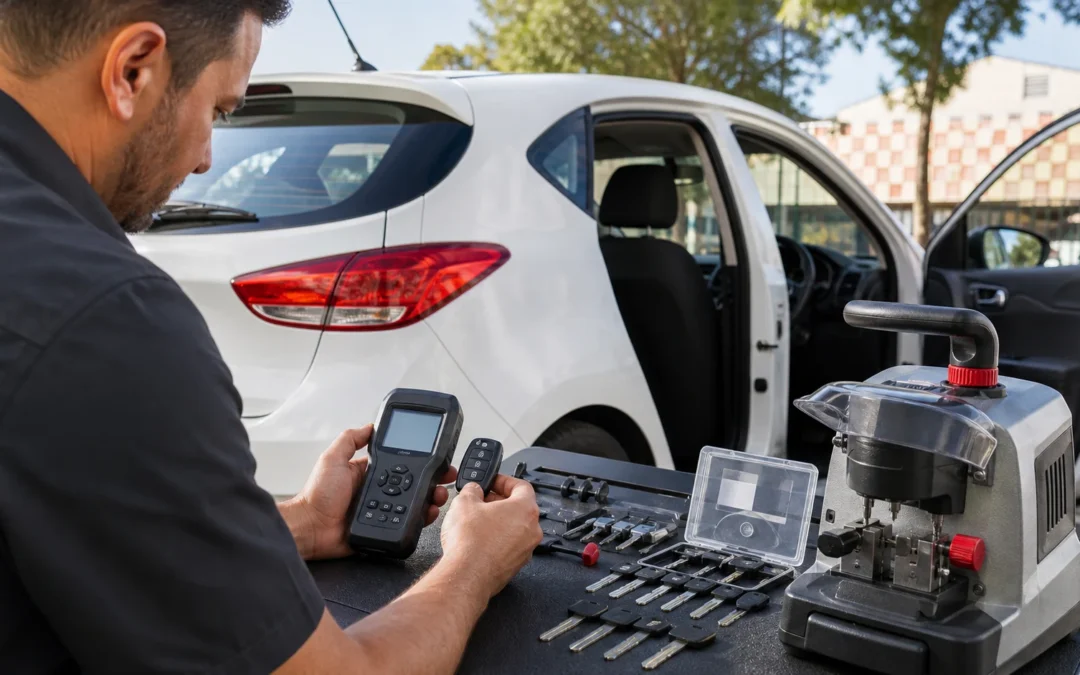
A mobile locksmith cuts and programs the key on site, at home, at work, or roadside, using the same category of equipment a dealership uses.
The full breakdown of how these two options compare on both cost and turnaround time is covered in mobile car locksmith versus dealership in Doncaster, which is worth reading if timing matters as much as price.
Why an upfront quote matters more than a headline number
A price quoted without seeing the vehicle or key type is close to meaningless. The honest approach is a locksmith who asks for the make, model, year, and situation (lost key, broken key, all keys lost) before giving a number, then confirms it before starting any cutting or programming.
Hidden fees tend to show up as callout charges, after-hours loadings, or programming fees added once the job is already underway. Asking for the full price in writing, including whether testing the key after programming is included, before the locksmith starts avoids that problem entirely.
A legitimate mobile locksmith operating around Doncaster and the wider Manningham area will hold public liability insurance and can provide an ABN on request, details worth asking for if a quote seems unusually low compared to everyone else you have called.
A quote that seems too good to be true often means a corner gets cut somewhere, whether that is skipping the key testing step or using a non-genuine chip that fails within months.
What to tell the locksmith when you call for a quote
The fastest way to get an accurate quote is to have the vehicle’s make, model, and year ready, along with whether you have a working key, a spare, or nothing at all.
Photos of the existing key, if you have one, help confirm whether it is a basic, transponder, or smart key before the locksmith arrives, which avoids the wrong equipment being brought out.
Mention whether you need one replacement key or two, since cutting and coding a second key at the same visit is usually cheaper per key than a separate call-out later. Your location within Doncaster, Bulleen, Templestowe, Donvale, or the wider Manningham area also matters slightly, since travel time affects scheduling more than the price itself.
Time on site follows the same pattern as price.
A basic blade key cut for an older vehicle is usually done in under ten minutes, a transponder key that needs coding to the immobiliser typically adds another fifteen to thirty minutes while the system confirms the new chip, and an all-keys-lost job on a newer smart key vehicle can run close to an hour once the locksmith establishes a secure connection to the vehicle’s security module.
Knowing this in advance sets realistic expectations for how long you will be waiting at the roadside or at home.
Getting a straight answer before you commit
Replacing a car key does not have to involve guesswork on price. Call Ostan Locksmiths on 0410 380 354 with your vehicle details for a straightforward, upfront quote, or request a free quote from Ostan Locksmiths before deciding between a dealership and a mobile car key replacement service.
Knowing the real cost drivers going in means no surprises when the invoice arrives.