
A driver in Templestowe turns the key on a cold morning, feels more resistance than usual, and hears a sharp snap. Half the key is still in her hand.
The other half is somewhere inside the ignition barrel, and the car is not going anywhere until it comes out. This happens more often than most drivers expect, and how the next ten minutes are handled decides whether the fix is quick or expensive.
Why Keys Snap Inside the Ignition
Metal fatigue is the most common cause.
A key flexes slightly every single time it turns the ignition barrel, and years of that repeated flex, especially on a key that gets twisted sideways while turning or used to support a heavy keyring hanging from the ignition, weakens the metal at its narrowest point near the base of the blade.
A worn ignition barrel makes the problem worse. As the internal pins or wafers wear down with age, the barrel needs more force to turn, and that extra torque lands directly on the weakest part of the key.
A key that has been bent slightly, whether from being sat on in a pocket or dropped, is also under more stress than a straight one every time it turns.
The narrow point right where the metal blade meets the plastic head is the single most common failure point, since that is where the cross-section of metal is thinnest and where a heavy keyring or a bunch of other keys hanging off it adds constant leverage.
A remote head key or transponder key, with a bulkier plastic head housing electronics, puts even more weight on that same narrow junction than a plain metal key does.
Cold Weather and a Stiff Barrel Add to the Risk
Ignition barrels stiffen slightly in cold conditions as the lubricant inside thickens, which is why snapped keys are more common on cold Doncaster mornings than on a mild afternoon.
A driver who feels unusual resistance turning the key on a cold start is getting a warning sign worth listening to rather than pushing through with extra force.
A barrel that has always turned smoothly and suddenly needs more effort is telling the owner something has changed internally, whether that is wear, a small object lodged inside, or a spring starting to fail. Addressing that resistance early, with a barrel inspection or lubrication, is far cheaper than dealing with a snapped key later.
Why Forcing It Makes Extraction Harder
The instinct after a key snaps is to keep trying, wiggling the remaining stub, pushing a spare key in beside it, or reaching for pliers to grip and pull. Every one of these actions risks pushing the broken piece deeper into the barrel or turning a clean snap into fragments scattered among the internal pins.
Pliers in particular tend to scratch or slightly bend the stub, making it harder for an extraction tool to get a clean grip afterward.
Superglue, sometimes suggested online as a way to glue a matching piece to the stub and pull it out, more often glues the stub permanently to the internal lock components instead, turning a straightforward extraction into a full barrel replacement.
Household lubricant sprays cause a quieter version of the same problem.
Spraying one into a jammed barrel can help a stub slide free in some cases, but it also attracts dust and grit over the following weeks, which builds up on the now-oily pins and wafers and leaves the barrel stickier than before within a few months.
Non-Destructive Extraction, Step by Step
A locksmith with the right tools can usually remove a broken key stub without damaging the ignition barrel at all, using thin extraction hooks and tension tools designed specifically for this job rather than anything improvised.
- The technician first inspects the barrel to see how much of the stub is visible and how it sits among the pins
- A fine hook or broken-key extractor is worked in alongside the stub, not against it, to avoid pushing it deeper
- Light tension is applied while the hook catches the cuts on the stub and draws it out along the same path it went in
- The barrel is tested with a working key afterward to confirm no fragments remain and the mechanism still turns cleanly
Done correctly, this whole process typically takes well under an hour and leaves the original ignition barrel completely intact, meaning no locks need replacing and no new keys need cutting for the doors.
When the Barrel Itself Needs Attention
Sometimes the broken key is a symptom rather than the whole story. If the barrel felt stiff or gritty before the snap, or if the extracted stub shows uneven wear marks rather than a clean break, the internal pins or wafers may already be worn enough to keep causing problems with a brand new key.
A barrel in that condition usually needs cleaning, lubrication, or in more worn cases, replacement of the ignition lock cylinder itself. Skipping this step after a clean extraction sometimes means a second snapped key down the track, since the underlying wear that caused the first break is still there.
A key stuck in the barrel is not always broken, either. Sometimes the whole key is intact but will not turn or will not come back out, usually because a worn tumbler has jammed in a half-turned position or a spring inside the barrel has weakened.
That scenario calls for a different technique to the one used on a snapped stub, working the mechanism back to its rest position rather than extracting a fragment, though it uses much of the same specialised toolkit.
Ignition Switch Failure Looks Similar but Is Different
A separate but related fault is the ignition switch behind the barrel failing electrically, which can cause a key to turn with unusual stiffness or not engage the start position properly, mimicking the resistance that leads to snapped keys.
This is a different component to the barrel and pins, and a locksmith’s diagnostic check during an extraction visit can usually tell the two apart.
Where the switch itself is at fault, no amount of new keys or barrel cleaning solves the underlying problem, and the vehicle needs the switch component addressed directly, which is usually a job handled alongside the broader emergency callout rather than a separate visit.
A dashboard warning light that appears alongside the stiffness, or accessories that cut out intermittently while driving, are both signs pointing toward the switch rather than the barrel itself.
Getting a New Key Made After Extraction
Once the broken stub is out, the vehicle typically needs a replacement key cut, and on any car with a transponder immobiliser, that new key also needs programming before the engine will start.
Ostan Locksmiths carries the coding tools to handle both the cut and the transponder key programming in the same visit as the extraction, so the car is not left driveable in theory but stranded in practice.
Where the other half of the key, the part still in the driver’s hand, is in reasonable condition, it can sometimes be used as a template to trace the new key’s cuts rather than needing a full code lookup, which speeds up the whole job.
As with any job involving a vehicle’s ignition, the technician confirms ownership through registration papers or photo identification before cutting and handing over a working key.
What to Do the Moment a Key Snaps
Stop turning immediately and do not attempt to insert anything else into the barrel, including a spare key, since a second object in an already jammed barrel makes extraction significantly harder. Leave the stub exactly where it is rather than trying to shift its position by hand.
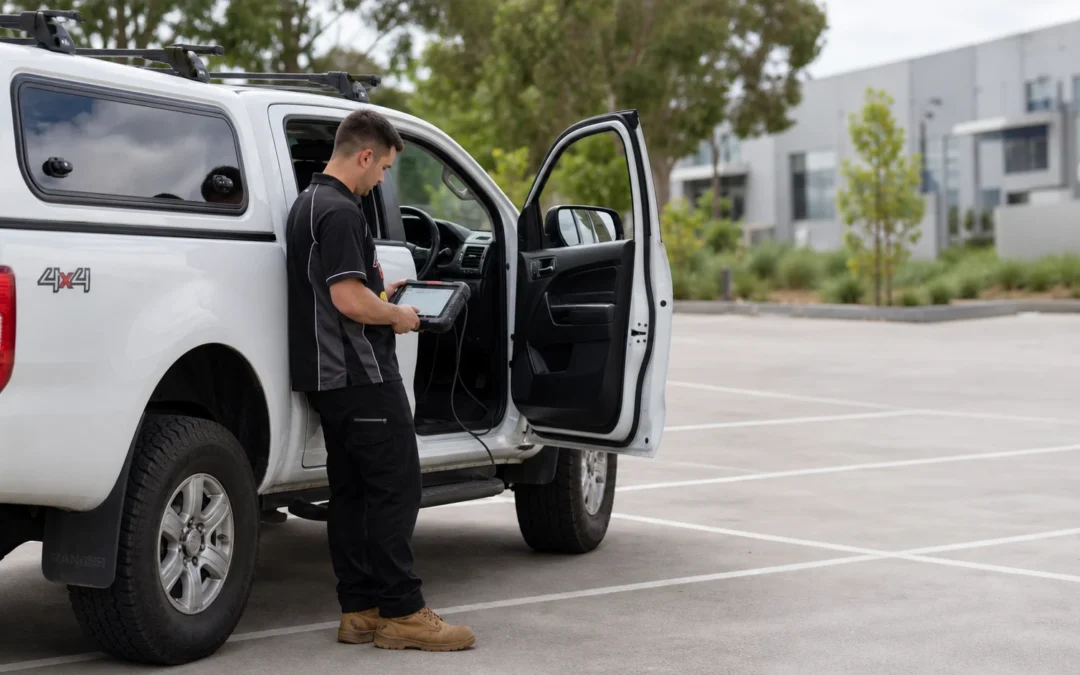
A call to Ostan Locksmiths brings a technician to the vehicle wherever it has stopped, whether that is a driveway in Warrandyte South, a car park in Park Orchards, or the side of the road in Nunawading, with the extraction tools needed to handle the job on the spot rather than requiring a tow.
If the vehicle is blocking traffic or parked somewhere unsafe, moving well clear on foot and waiting for the technician matters more than protecting the stuck key from further damage.
A Snapped Key Does Not Mean a Stranded Car
What feels like a dead end at the ignition barrel is, in almost every case, a job that gets solved on site within the hour. Ostan Locksmiths’s emergency car locksmith service runs 24/7 across Doncaster and the rest of the City of Manningham, covering exactly this kind of unplanned breakdown alongside lockouts and lost keys.
Anyone dealing with a snapped key right now can call 0410 380 354 for an immediate response, or request a callback from Ostan Locksmiths to arrange a visit.
For related situations, our guides on what to expect from a 24/7 emergency car locksmith and what to do when locked out of your car cover the two other most common roadside situations drivers in Doncaster run into.