
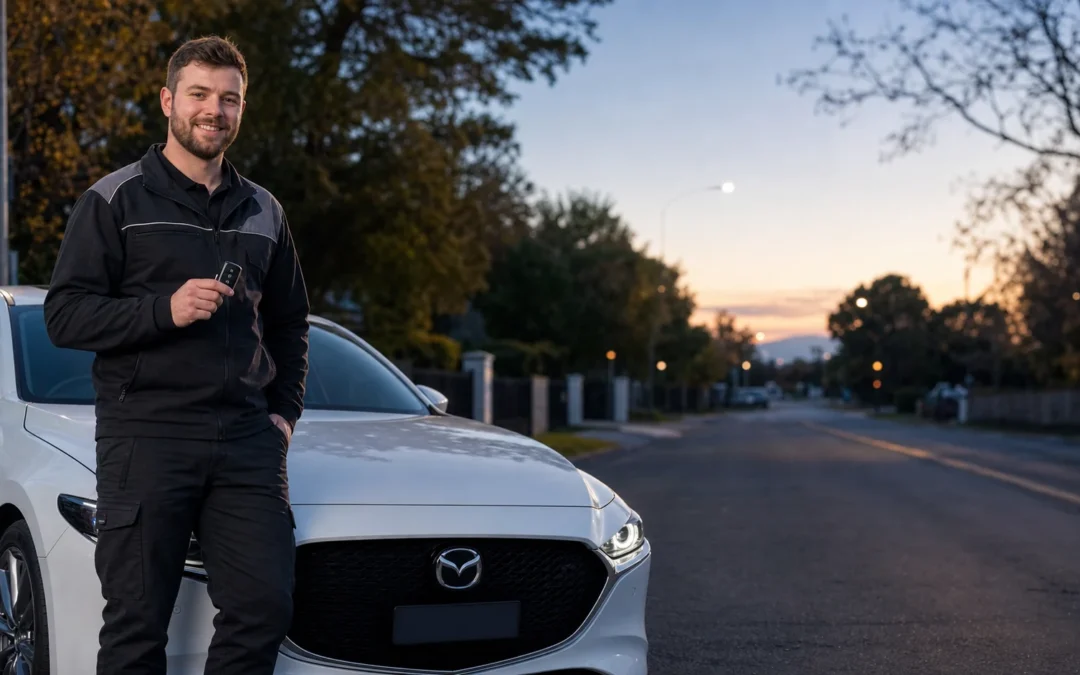
It is 11pm on a Friday in Warrandyte and the last thing anyone wants is to be standing beside a locked car with a phone battery sitting on four percent.
Emergency call-outs do not happen on a schedule, which is exactly why a locksmith who actually answers the phone at that hour matters more than one with the cheapest daytime rate.
What happens from the moment you call
A genuine 24/7 emergency locksmith answers the phone directly, not a voicemail box that gets checked in the morning.
The first questions are practical: where the vehicle is, the make and model, and whether you are locked out, dealing with a broken key, or facing something else entirely, such as a flat fob battery or a fault after an alarm has triggered.
From there you get a real arrival window rather than a vague promise of “sometime today.”
Because the locksmith is mobile, the vehicle is worked on wherever it sits, in a driveway in Doncaster East, a car park in Templestowe, or the side of a road in Park Orchards, with no need to arrange a tow first.
How non-destructive entry actually works
Modern lockout tools are built to manipulate the locking mechanism itself, not to pry the door frame or force the window seal open.
A trained locksmith reads the specific lock type on your vehicle, whether it is a manual latch, a central locking system, or a keyless entry fault, and selects the tool that matches it before touching the car.
This matters because forcing a door with a wedge or a coat hanger can bend the frame, damage the weatherstripping, or trigger airbag and alarm sensors in newer vehicles.
Non-destructive entry leaves no mark on the paint or the frame, which is part of why it takes years to master properly and why the right equipment, not brute force, is what actually gets the door open cleanly on a Holden Commodore just as reliably as on a new Toyota RAV4.
The same toolkit applies across brands with only minor variation, since central locking and keyless systems on a Mazda, a Hyundai, or a Ford share the same basic logic even if the exact sensor placement differs.
A locksmith who works across all makes daily builds a feel for these differences that someone attempting a one-off DIY fix simply has not had the chance to develop.
What to have ready before the locksmith arrives
Two things speed the job up considerably: proof that the vehicle is yours, such as registration papers, a rego check on your phone, or a driver’s licence matching the name on the rego, and a clear description of what is actually wrong.
A locksmith needs to confirm ownership before opening any vehicle, which protects you as much as it protects them from opening the wrong car for the wrong person.
If the issue is a lost or broken key rather than a straightforward lockout, having the VIN on hand, usually visible through the windscreen on the dashboard or printed on the registration certificate, lets the locksmith bring the correct blank key and coding equipment on the first visit instead of needing a second trip once the exact model is confirmed.
A card or phone for payment is worth having ready too, since most mobile locksmiths take payment on the spot once the job is finished rather than issuing an invoice to chase up later.
Confirming the price before work begins, not after, avoids any confusion once you are relieved to simply be back in your car.
When a child or pet is locked inside the car
A locked car with a child or a dog inside changes the priority of the call immediately.
This is treated as the most urgent category of emergency, ahead of a driver simply locked out with nothing at risk inside, and a genuine 24/7 locksmith moves this kind of job to the front of the queue rather than working through calls in the order they came in.
On a warm day, the temperature inside a closed car can climb well past the outside air temperature within minutes, which is why speed matters more than anything else in this situation.
If you are ever in this position, call triple zero first if the child or pet shows any sign of distress, and call a locksmith in parallel for the fastest possible non-destructive entry, since forcing a window yourself risks glass injury to whoever is inside.
Night and weekend call-outs are a different job
A 2am lockout outside a house in Bulleen is a very different situation to a 2pm lockout in a supermarket car park.
Streets are quieter, fewer people are around to help if something else goes wrong, and the driver is often more tired and stressed, which is exactly when a calm, direct process from the person on the phone matters most.
Weekend and after-hours availability is not just a line on a website. Locksmiths in Doncaster who genuinely run around the clock keep a stocked vehicle ready to go at any hour, with key blanks, cutting tools, and programming equipment already on board, rather than needing to source parts once a call actually comes in.
Why Manningham’s lack of trains and trams changes the stakes
The City of Manningham is the only metropolitan Melbourne council area without a train line or tram service, which means most residents in Doncaster, Donvale, and Templestowe Lower depend on their car for almost everything: work, school pickups, groceries, medical appointments.
A lockout here is not a minor inconvenience with a train station two minutes away as a backup plan.
That reliance on private vehicles is exactly why fast, reliable roadside help carries more weight in this part of Melbourne than it might in inner suburbs with dense public transport options.
Waiting hours for a locksmith when there is no bus or tram alternative nearby leaves people genuinely stranded rather than just mildly delayed, particularly late at night in quieter pockets like Wonga Park or Warrandyte South.
Doncaster sits around 15 kilometres east of the Melbourne CBD, with most local traffic moving along the Eastern Freeway, Doncaster Road, and Elgar Road corridors.
A mobile locksmith already positioned somewhere along these routes can reach a stranded driver in Bulleen or Donvale faster than one dispatched from further afield, which is part of why local coverage matters more than a call centre that dispatches from across the city.
Beyond lockouts: other situations that count as emergencies
Emergency call-outs cover more than a simple lockout. A key snapping off inside the ignition barrel, a smart key fob with a dead internal battery that will not communicate with the car, or a transponder chip failing to register with the immobiliser can all leave a driver stranded just as effectively as a locked door.
Each of these needs a slightly different fix, from extracting a broken key fragment without damaging the ignition barrel itself, to reprogramming a replacement fob on the spot using OBD diagnostics.
A locksmith carrying this equipment in the vehicle can usually resolve the issue on the first visit rather than sending the car off to a dealership and leaving you without transport for days.
An ignition barrel that has started to stick or feels loose before it fails completely is also worth treating as an early warning rather than waiting for a full emergency.
A locksmith can often repair or replace a worn barrel during a scheduled visit, which is considerably less stressful than dealing with the same fault after it strands you somewhere on a Sunday night.
What determines how fast help arrives
Response time depends on where the locksmith is already working, current traffic conditions, and how specific the vehicle details are when you call.
Someone already working near Nunawading or Ringwood North will reach a Doncaster East call faster than one starting from the other side of Melbourne, which is one reason a genuinely local, mobile operator matters.
Giving accurate details upfront, the exact address, the vehicle make and model, and the nature of the problem, cuts down on back-and-forth phone calls and gets the right person moving straight away instead of arriving with the wrong equipment for the job.
Weather plays a smaller but real part too. Heavy rain during a Melbourne cold front slows every road job across the eastern suburbs, and a locksmith who is upfront about a longer wait in those conditions is more useful than one who promises an unrealistic arrival time and then falls short of it.
Saving the number before you need it
The best time to find a reliable emergency locksmith is before you are standing in a dark car park needing one.
Save Ostan Locksmiths’s number, 0410 380 354, in your phone now, and if you are dealing with a lockout right now rather than planning ahead, read what to do if you are locked out of your car in Doncaster, or if the problem is a snapped key, see what to do about a broken key stuck in the ignition.
For anything more urgent, the emergency car locksmith service is available around the clock, and you can also request a callback to get help moving straight away.