
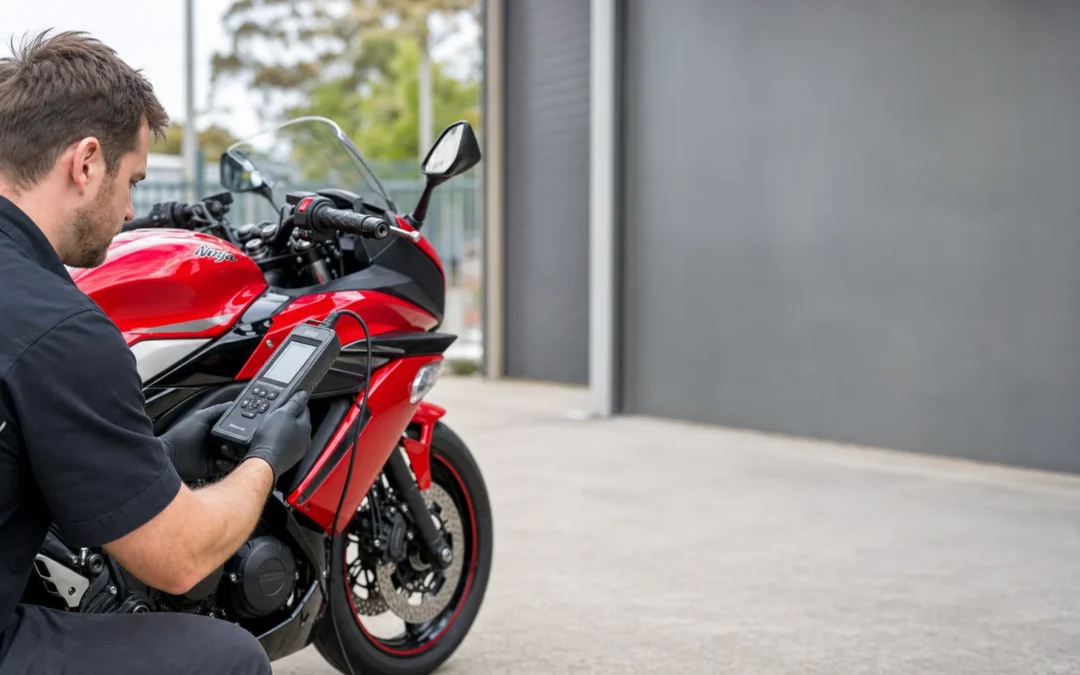
A Honda left parked outdoors in Park Orchards for a few winters develops a gritty resistance in the ignition barrel long before the key itself shows any wear.
The rider assumes a new key will fix it, has one cut, and finds the same stiff, catching turn every morning. The problem was never the key.
It was the barrel wearing out from the inside.
What the Ignition Barrel Actually Does
Inside every ignition lock sits a set of small metal tumblers or wafers, spring-loaded to block the barrel from turning until a key with the correct cut pattern pushes each one to exactly the right height.
Once every tumbler lines up, the barrel rotates freely and the electrical or mechanical connection that allows starting is made.
These are small, precise parts working under constant vibration from the engine and the road.
A barrel that has turned smoothly for years can start to fail gradually as springs weaken, tumblers wear at their contact points, or dirt works its way into the mechanism, none of which has anything to do with the key itself.
Many motorcycles link the ignition barrel mechanically to the steering lock, so turning the key past the ignition position also releases the forks to turn freely.
This shared mechanism means a fault in one system can sometimes present as trouble in the other, which is one reason a locksmith checks both when a rider reports either issue rather than assuming they are unrelated.
Melbourne’s Weather and Exposed Barrels
Motorcycles spend far more time exposed to the elements than cars, since even a bike parked under a carport catches wind-driven rain and, over a Melbourne winter, condensation that a garaged car largely avoids.
Moisture that gets past the barrel’s cover works into the tumbler mechanism and either causes rust directly or washes out the light lubrication the lock relies on.
Riders in the outer parts of the service area, around Warrandyte, Warrandyte South, and Wonga Park, often deal with more exposed parking, whether that is a driveway without cover or a shed with gaps around the door, and barrels in these conditions tend to show wear earlier than a bike kept in a fully enclosed garage in central Doncaster.
Autumn brings a second contributor in the leafier pockets of Donvale and Park Orchards, where damp leaf litter collects around a parked bike and holds moisture against the ignition cover far longer than open pavement would.
Summer dust storms have the opposite effect, driving fine grit into the same gaps once the weather turns dry again, so barrels in these suburbs face a two-season cycle of damp contamination followed by abrasive dust.
Worn Tumblers vs a Bad Key
A key that has been carried loose in a pocket for years, jangling against coins and other keys, can wear down at the cut points enough to stop operating a lock reliably. This looks similar to barrel wear from the outside, since both produce a key that turns with difficulty or not at all.
The distinguishing test is trying a second key, either a spare or a freshly cut one, in the same barrel.
If the new key also sticks, catches, or requires extra force in the same spot, the fault sits in the barrel’s tumblers rather than the key blade, and cutting a third key will not solve anything.
A Common Mistake That Makes Barrel Wear Worse
A sticking key often prompts a quick spray of a general-purpose lubricant into the barrel, which can offer short-term relief by displacing surface grit and loosening a stiff turn.
The trade-off is that thin aerosol solvents also wash out the heavier lubricant originally packed around the tumblers, leaving the mechanism drier than before within a few weeks and often worse off than doing nothing at all.
A dry, powdered graphite lubricant designed for locks is a better short-term measure, since it does not strip existing grease the way a solvent-based spray does.
Either way, masking a sticking key with lubricant treats the symptom rather than the cause, and a barrel left this way tends to fail completely at an inconvenient moment rather than giving further warning.
Corrosion and Contamination Inside the Barrel
Road grit, gravel dust from unsealed sections of track around Wonga Park, and general airborne debris settle into the small gap around the key slot over time.
Combined with moisture, this creates a light abrasive paste inside the mechanism that grinds at the tumbler surfaces every time the key turns, accelerating wear well beyond normal use.
Corrosion on the tumblers themselves changes their shape slightly, which means even the correct key no longer pushes them to the precise height needed.
A barrel in this state can become progressively harder to turn over weeks or months rather than failing all at once, which is why many riders do not notice the gradual decline until the key barely turns at all.
Signs the Barrel Needs Attention Before It Fails Completely
A key that needs wiggling, lifting, or extra pressure to engage, a barrel that feels gritty rather than smooth through the turn, or a key that only works in one specific position all point toward barrel wear rather than a key problem.
Intermittent faults, where the bike starts fine some days and not others with the identical key, are a classic sign of a barrel on its way out.
A steering lock that jams alongside ignition trouble often points to the same underlying cause, since the steering lock and ignition barrel are frequently linked mechanically or share the same weather exposure on many motorcycle models.
Repair vs Replacement: When a Barrel Can Be Salvaged
Many worn barrels can be cleaned, re-lubricated, and have their tumblers adjusted or replaced individually without removing the entire lock assembly from the bike. This is generally the faster and less invasive option where the housing itself is not physically cracked or the wiring loom behind it is undamaged.
A barrel with a snapped key still lodged inside, visible corrosion eating through the housing, or damage from a forced entry attempt usually needs full replacement rather than repair.
Deciding which category a specific barrel falls into is easier once a locksmith has actually inspected it, since wear that looks minor from the outside can be more advanced internally.
On bikes fitted with a transponder reader built into the barrel housing, replacement carries an extra step beyond the mechanical swap, since the new barrel’s reader coil needs to be matched up with the key’s chip and the immobiliser reprogrammed to accept it.
Skipping that step leaves a mechanically perfect barrel that still will not let the engine start.
On-Site Repair Without a Tow to a Dealership
Booking a dealership for barrel work generally means the bike is off the road for however long it sits in a service queue, on top of the trip to get it there in the first place, which is a bigger problem for a bike than a car given how impractical towing a motorcycle is.
A mobile locksmith carrying barrel repair tools, replacement tumblers, and key cutting equipment can diagnose and often resolve the fault at the bike’s own parking spot.
This matters across the City of Manningham specifically, where the absence of any train or tram line means a rider without a working bike often has no quick way to get to a dealership in the first place.
Non-destructive repair methods avoid cutting or drilling into the housing unless the barrel is damaged beyond saving, which keeps the original ignition assembly intact wherever possible.
A dealership visit for barrel work also usually means the bike is assessed by whoever is rostered on that day, with limited scope to explain gradual symptoms in detail.
A mobile locksmith attending the actual bike can ask about riding patterns, storage conditions, and when the sticking first started, information that often points directly at the cause rather than just the fix.
What a Repair Visit Involves
The locksmith first tests the existing key and a freshly cut backup in the barrel to confirm the fault sits in the lock rather than the key, then removes the barrel cover to inspect the tumblers, springs, and any visible corrosion or debris.
Cleaning and re-lubrication resolve a surprising number of cases on their own, particularly where grit rather than physical wear is the main cause.
Where individual tumblers are worn beyond adjustment, they are replaced and the barrel re-tested against the existing key before the locksmith leaves, checking for a smooth, consistent turn across several attempts rather than a single lucky start.
For riders who have not yet identified whether their issue is a locksmith matter at all, this guide on finding a motorcycle locksmith near you in Doncaster covers what a genuine motorcycle-capable locksmith should offer beyond basic key cutting.
If your bike’s key is sticking, catching, or only turning some of the time, the barrel is worth checking before another key gets cut. Call Ostan Locksmiths’s motorcycle lockout and ignition service on 0410 380 354 or request a free quote from Ostan Locksmiths for a mobile inspection anywhere across Doncaster and the surrounding suburbs.