
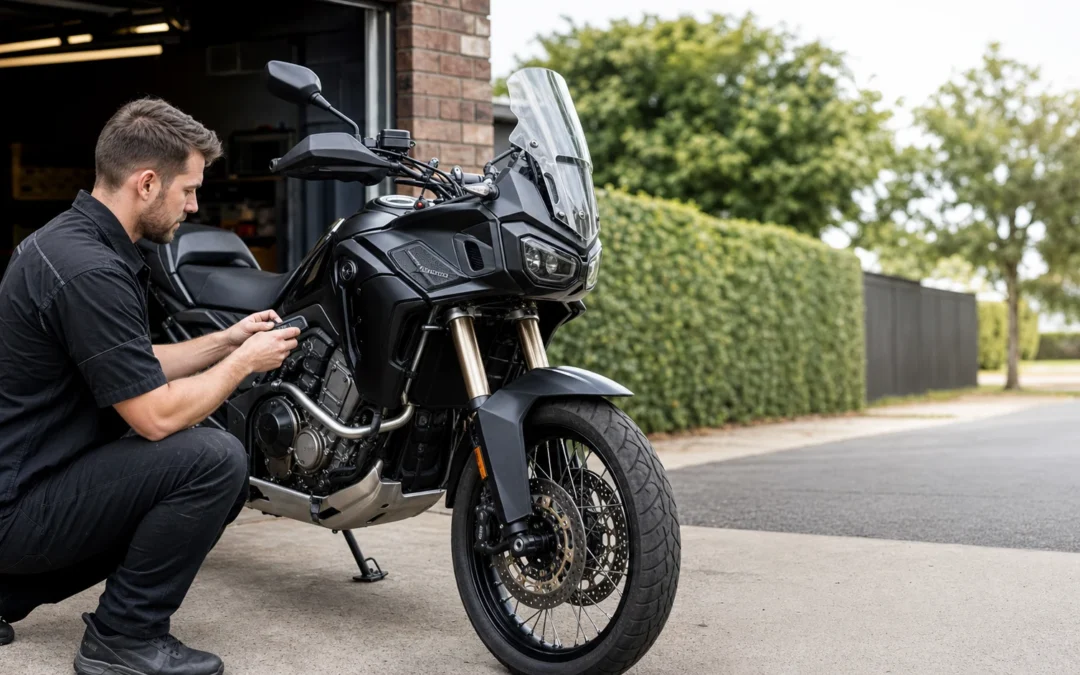
Riders usually think about a spare motorcycle key only after the first one is lost, snapped, or locked inside a top box on the side of a road in Doncaster East.
By then the job has changed from a routine key cut to an emergency callout, and the price and wait time both reflect that change.
Getting a spare cut while the original still works is one of the cheapest pieces of insurance a rider can buy, and it takes far less time than most riders expect.
Why a Spare Costs Little Now and a Lot Later
Cutting a spare key while the original is in hand and the bike is sitting in a garage is a short, straightforward job. There is no diagnosis needed, no waiting on parts, and no pressure of a bike stranded somewhere it should not be.
The locksmith cuts the blade, programs the chip, and confirms the bike starts, all in one visit, usually inside thirty minutes for a standard transponder key.
An all-keys-lost situation is a different job entirely. Without any working key to reference, a locksmith has to establish the correct cut and chip data from the bike itself, which takes longer and often costs more than a straightforward spare would have.
It is also common for riders who bought a bike secondhand to only ever have had one key, since a private seller often keeps, misplaces, or never had the second one to begin with, leaving no built-in backup from day one.
Cutting a Spare From an Existing Key
The most common way to make a spare is copying the cut pattern directly from the original key using a dealer-level key cutting machine.
This works for standard blade profiles used across most Honda, Yamaha, Suzuki, and Kawasaki models and takes only minutes on site, whether at home in Bulleen or at a workplace in Nunawading. The original never needs to leave the owner’s hand during the process.
An original key with a rounded or worn shoulder can throw off a traced copy slightly, since the cutting machine references that shoulder to set its starting point. A locksmith checks for this before cutting rather than assuming every original is still true to its factory profile.
Higher-end bikes with more complex blade geometry, certain Ducati and BMW models in particular, need machines calibrated to their specific tolerances. A locksmith carrying the right cutting equipment can still complete this on site rather than sending the job away.
Where a bike is ridden by two people, a partner or another family member for instance, a second spare can usually be cut in the same visit for barely any extra time, since the reference key and the machine setup are already in place.
Cutting to Code When There Is No Key to Copy
Some riders end up needing a spare without a working original to copy, for example a bike bought secondhand with one key that is already worn or a key that has been damaged beyond safe duplication.
In that situation a locksmith can cut a key to code, looking up the bike’s original cut specification against its VIN or key code rather than the physical key itself.
This method relies on accurate records tied to the bike’s identification number, which is why locksmiths ask for the VIN or registration details up front.
Because cut specifications occasionally change partway through a model’s production run, the locksmith cross-references the exact build date and model year rather than assuming every bike badged the same is cut identically. It produces a key cut to the exact factory specification without needing anything to trace over.
A Cut Key That Fits Is Not Always a Key That Starts the Bike
Most motorcycles built since the early 2000s use a transponder chip embedded in the key that communicates with an immobiliser in the bike’s wiring.
A blade cut correctly to fit the ignition barrel will turn and unlock the steering, but if the chip inside is missing or unregistered, the immobiliser stops the engine from starting.
Riders sometimes assume a spare is finished once it turns in the lock, then find the bike will not fire.
The mechanical fit and the electronic authorisation are genuinely two separate systems working side by side, one a physical blade shape and the other a radio-frequency signal read by an antenna around the ignition.
This catches out anyone who has a spare blank cut at a generic hardware key stand without confirming it includes the correct transponder and programming step. A cut-only key will get you onto the bike but not down the road.
Programming the Spare to the Immobiliser
Once the blade is cut, the chip has to be registered to the bike’s immobiliser so the ECU recognises it as an authorised key.
This is done on site using OBD diagnostic and key coding tools connected directly to the bike, without needing to send anything to a dealership.
Most transponder systems use a rolling or encrypted code rather than a fixed signal, which is part of why the chip cannot simply be copied the way a mechanical blade can, and why proper coding equipment matters more than it might seem.
Most manufacturers allow multiple keys to be learned to one immobiliser, so adding a spare does not remove the original’s programming.
Adding a single spare while the original still works usually only requires the new key present during coding, though a handful of models require both keys present together as a security measure against unauthorised duplication.
A small number of higher-security systems, again seen on some Ducati and BMW models, use master-key architecture where programming a spare has to go through the ECU rather than the ignition barrel directly.
A locksmith working with the right equipment handles this the same way as a standard bike, just with an extra step.
Comparing the Cost of Prevention to the Cost of All Keys Lost
A spare cut and coded while the original is present is one of the simplest jobs a mobile locksmith does, because the reference key removes all the guesswork.
An all-keys-lost job on the same bike, after the original is gone, involves extracting data from the ignition or ECU, sometimes replacing the barrel entirely, and more time on site overall, since there is no reference point to work from and every step has to be verified independently.
Because pricing depends on the bike’s make, key type, and immobiliser system, Ostan Locksmiths does not quote a flat figure for either job over the phone. Call 0410 380 354 or request a free quote from Ostan Locksmiths for an accurate price based on your specific bike.
Storing and Testing the Spare Properly
A spare only helps if it is somewhere other than on the same keyring as the original. Riders who keep both keys together lose both the moment a jacket, bag, or top box goes missing.
A spare left at home, with a family member, or in a separate bag from the primary key actually solves the problem it was cut for.
Avoid storing it inside the bike’s own seat compartment or panniers, since losing the primary key can also mean losing access to wherever the spare was hidden.
Before the locksmith leaves, the spare should be tested starting the bike, not just turning in the ignition.
On bikes where the ignition, seat lock, and fuel cap are all keyed alike, it is worth checking the spare opens each of those too, since a spare cut slightly off can sometimes turn the ignition but bind on a secondary lock.
Confirming the transponder is reading correctly on the day it is cut avoids discovering a programming issue weeks later when the original is the one that goes missing.
Writing the date it was cut on a small tag or noting it in a phone contact entry also helps years down the track, when a rider can no longer remember whether a given blade is the trusted original or the spare made in a hurry.
Getting a Spare Cut Without Visiting a Shop
Ostan Locksmiths brings dealer-level key cutting machines, coding tools, and OBD diagnostics directly to the bike, so there is no need to trailer a motorcycle anywhere across Doncaster, Templestowe Lower, or Warrandyte to get a spare made.
The full service, from cutting the blade to coding the chip, happens in one mobile visit, and most bookings across the City of Manningham can be scheduled within the same week. Full details on the service are on the spare motorcycle keys page.
Riders who have already lost their only key rather than planning ahead should read lost motorcycle key with no spare in Doncaster: your options, and those wanting more detail on the VIN-based cutting process can see motorcycle key cutting to code in Doncaster.
The Best Time to Book Is Before You Need It
A spare key cut this week costs a fraction of what an emergency all-keys-lost callout costs after a genuine loss.
Riders across Manningham who ride daily, whether commuting from Doncaster East or touring out through Wonga Park on weekends, are better served getting a spare made during a routine week than waiting for the situation that forces the issue.
Call Ostan Locksmiths on 0410 380 354 to arrange a mobile visit and have a coded spare in hand before it becomes urgent.